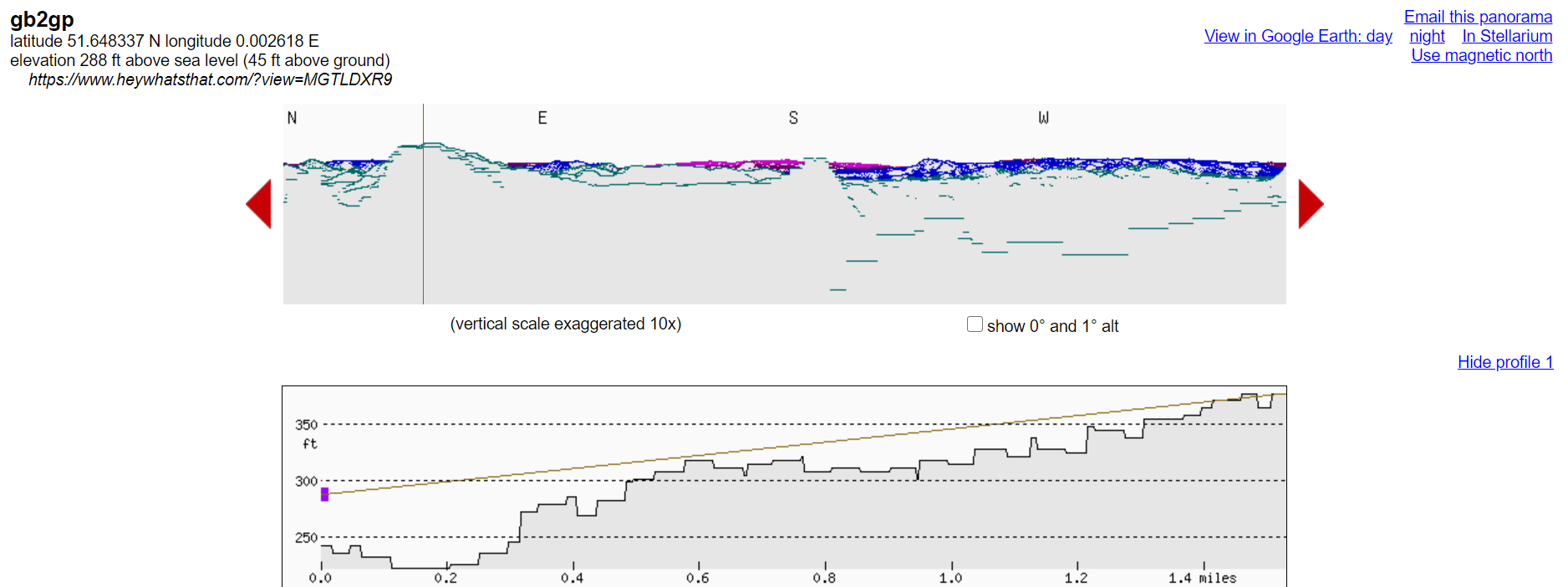
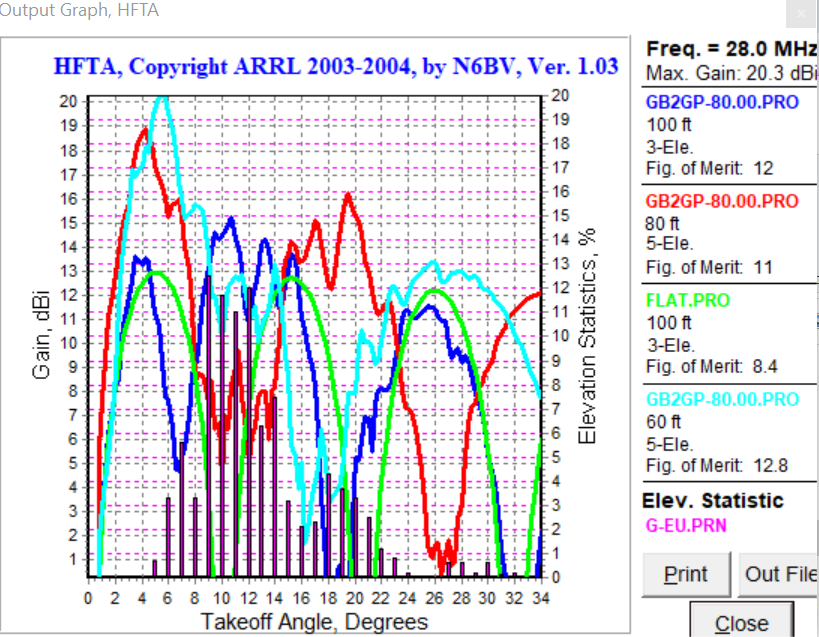
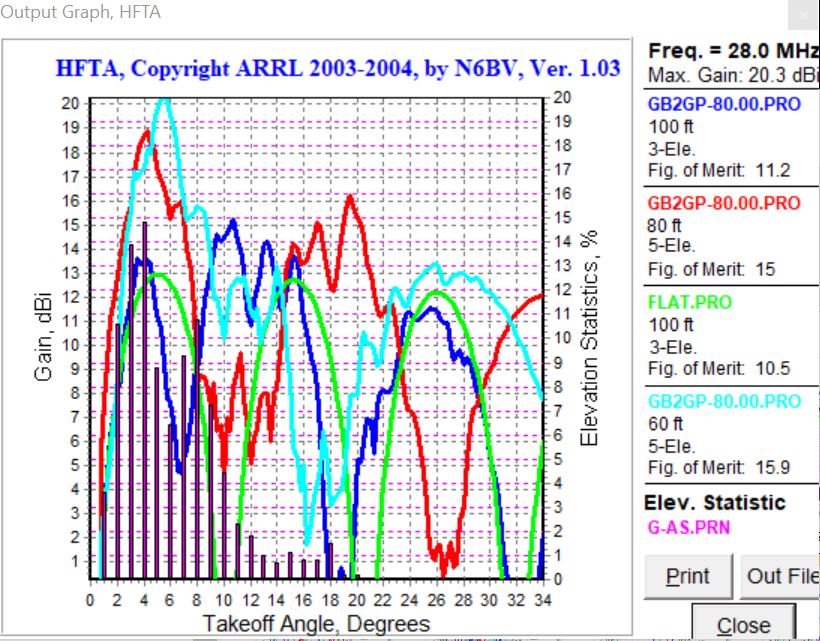
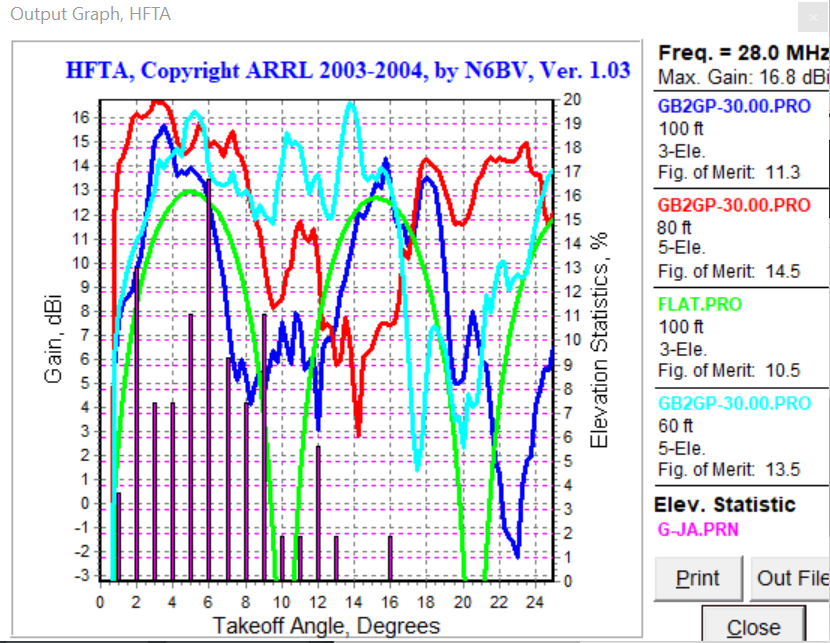
Still very busy with work at the moment, but I was trying to get my APRS digi up an running at home again to see if I can fill in some of the holes left by the demise of GB2GP.
The rising cost of electricity means that I don’t want to run a PC all day just to perform the digipeater duties (I calculated the cost as 50p for 24 hours) as there are already three good I-gates in 2E0RNT, M0TEC and MB7UFF already.
I have been looking at using UIDIGI for some time and fortunately I got a prom blown by N1VG at Argent Data systems – the man who makes the open trackers. I finally got around to putting up a low co-linear in the garden last night and inserting a UIDIGI prom into my tiny 2. I had to reconfigure this a few times to get things going, but I think everything is now OK and I am now acting as a fill in digipeater again for North London. The antenna needs to go on the roof, to be really effective, but I have been saying that for months!
I shot off after VHF FD for two weeks on holiday in France. The first week was split between the North (near Calais) and a city break in Toulouse. The second week we had a gite near Pau and a hire car so I threw in my FT-60E, Opentracker+, puck GPS and a ¼ wave mini mag mount to see if things worked out there.
There were several issues learnt: the standard HT battery only lasts about 2 days , but I had two, so I covered most of our trips out and about (I didn’t take a charger to reduce the amount I was carrying). The 1300MAH lithium cells that I used to power the tracker and GPS also had a surprising short life but a recharge half way through covered that off. A final issue was setting up the transceiver/tracker. If I set the squelch to an appropriate level at the gite , out in the sticks, it was useless in town where the noise levels were higher. This meant the tracker thought the channel was busy and didn’t tx for long periods of time. Once I had worked this out and adjusted the squelch in town things were much better. Perhaps I also need to play with the software DCD on the tracker as well to avoid this in the future.
I checked aprs.fi on my mobile a couple of times and was surprised about the level of coverage I received. If you look for M0BPQ-12 on the db0anf site you will see some great tracks.
I see that this is all down to the efforts of the F5ZVO digi at La Pierre St-Martin, which is a ski resort in the mountains. There is no wonder it does such a good job when it is at 1700M ASL.
Looking at the data afterwards, I was also amazed to see that I was logged by EC1H-12 at a remarkable 464Km, also when I was up in the mountains. Not bad for a data mode, 5W and a ¼ wave whip on 2m..... Location, location, location!
The Clifton 2008 VHF FD effort from the Kent county showground took place with even fewer operators than usual. With our stalwart 70cm operator G4FAA out of action due to family illness we decided to run 6, 4 and 2m, with 70cm as an make weight for an hour or two overnight after 6 finished and before 4m started. Overall we planned to hit the mix and match section.
The weather forecast was ominous, with low pressure coming from the west. We got on site at around 10am Saturday and had tents up quite quickly so we had somewhere to shelter should the heavens open. In actual fact it was bright if breezy for all of Saturday. The antennas went together quickly and two 10m masts erected by 1300UTC. One mast had a dual band 6/4m yagi and a 21 el Tonna. The second had a 3WL 2m yagi. We had a minor wobble with the 2m mast as it went up but some quick work on the ropes ensured everything stayed up. By Clifton standards it was a minor tremble and will not go down in the club annals alongside the unrestricted downward telescope (aka collapse) of a lattice mast or causing a motorcyclist to end up in the hedge bottom as Jacob’s ladder ascended to heaven in the field next to him.
Remarkably the RF side went together well the 6/4/70 station was based around an FT-847 and amplifier so that was simple and reliable all weekend. The 2m station was an IC-756Pro, DEM transverter and amplifier where the only problem was the sequencer packing up but some quick work with the soldering iron sorted that out in about 20 minutes. We had a wifi network running N1MM on site and the cluster supplied by 3G was reliable all weekend. The gas powered generator required no attention at all other than “start” and “stop”.
The low pressure and predicted heavy weather led us to expect little tropo enhancement once we got underway and we weren’t wrong. We made 20 fewer QSOs on 2m than our adjudicated score last year and 130 less than 2005. The station seemed to work, with 700Km contacts to the bigger continental stations but we simply didn’t get a run of the average “near continental” home stations that makes a 2m contest weekend. We also closed down on 2m overnight as will power decreases as the average age of the club increases and conditions didn’t warrant the effort. We had a tune around on 70cm and worked the locals over an hour or so for a token entry so can’t really comment on that band.
6m provided some entertainment. With a few minutes to go before the contest started, M0BPQ found the CY0X DXpedition running stations on cw and at 1400UTC exactly what turned out to be our best DX was in the log at 4490 Km. From there on we had a reasonable time with spotty SpE throughout the contest from all over Europe. G7TWC put in a shift on SSB to make many of the contacts. The Sunday 4m session with G3JKY at the helm had a fast start, but the contacts soon dried up. We were unable to contact IK0SMG on SpE early in the contest (he appeared for about 3 minutes) but getting a very weak CT1HZE in the last few minutes helped enormously. We didn’t help ourselves mind, as a Caribbean opening on 6m caused a quick QSY and bagged PJ6, TO5E and three KP4’s outside of the contest and an hour’s entertainment in the middle.
The wind and rain really ratcheted up at around noon Sunday, making for a wet tear down. I didn’t feel that the weather was as bad as the forecast predicted, but we were off site two hours after the contest ended so it certainly speeded us up!
Operators: G0DCG, G3JKY, M0BPQ, G7TWC, G4RFC, with help from G0NGP and G7BKH
Equipment: FT847 on 70cm (35W and 21 el, restricted section), 4m (25W and 5 el, low power section), and 6m (100W and 4 el restricted section). IC-756Pro + DEM transverter + amp (100W and 9 el restricted section). Overall mix and match section. Score summary from N1MM:
Band Call Mode QSOs Pts ODX KM
50 M0BPQ/p Both 72 62429 CY0X 4490
70 M0BPQ/p CW 2 834
70 M0BPQ/p USB 32 7448 CT1HZE 1728
144 G3GHN/p USB 147 34270 F1USF/p 798
420 M0BPQ/p USB 12 1396 DK0PU 429
Again a big gap between posts.
The radio scouting team dismantled the GB2GP shack last weekend and I have ended up with yet more kit to hide in the loft. Everything went smoothly, but there will be no radio activity from Gilwell until the LID is back running in March 2009.
The group has been offered a time step wx sat receiver and antenna though and we are investigating ways to put this up as a permanent demonstration station, perhaps coupled with a weather station. There are obvious possibilities for publishing data on the web or tying it in with a formal APRS Igate. I find the RSGB packet radio licensing forms baffling, so I may look for some help on how to move that forwards.
It is region1 VHF FD this weekend and the weather forecast is terrible! I am providing the computer network running n1MM and 3G cluster along with the 6/4m and 2m station for the Clifton ARS.
The 6/4m station will be my FT-847 running 100W on 6m and 25W on 4m to a dual band yagi at 10m agl (4 el on 6m – restricted section, 5 el on 4m low power section).
The 2m station will be my IC-756Pro, DEM transverter, linear amp, sequencer, preamp and 9 el DK7ZB at 10m AGL for the restricted section.
I might chuck in the Gilwell TS-200 to run on 70cm if we have enough operators!
That doesn’t look like much gear, but add in tents, poles, ropes, ac distribution, computers, networking, heliax, rotators and all the interconnecting cables it will fill the hire van. Never mind all the effort that goes into making it all fit together in the first place. This will probably be the last time I get so involved as it is becoming expensive and an awful lot of work! Anyone need a seasoned operator for VHF FD next year?
As busy few days radio wise!
NFD took place this weekend and I was part of the Clifton ARS entry (G3GHN/p) from near Maidstone in Kent.
I provided a full station, IC-756Pro, PC running N1MM, Microham Microkeyer, 9.5m mast and a doublet antenna to go with the club’s auto ATU. It is the first year we have run a doublet fed with open wire, in the past the ATU was at the top of the mast at the centre of the “dipole”. This time we had 50ft of open wire feeding the 260ft long inverted-V.
This seemed to be a better antenna than previous antennas on all bands, but especially on 40 and 80m. I had a panic when AATU did not tune the antenna on the cw part of top band, but did higher up in the SSB section. We played around with the length of the antenna, to no avail. G3JKY came to the rescue and commented that the voltage at the feed point must be too high and that we either needed to dramatically change the length of the open wire (we weren’t sure by how much) or add some capacitance at the bottom of the open wire feeder when using top band. We were reluctant to cut the open wire in case it made things worse so went for the capacitance route by fitting an so-239 across the terminals of the AATU and plugging a random (50ft?) length of co-ax into it. As the co-ax was open circuit it provided enough capacitance to help the ATU do its stuff on top band. Well done Jakey! I couldn’t have come up with that. I now need to learn how to optimise the open wire length so we don’t have that performance again! Any idea, readers?
On the air things went well. HF conditions seemed poor on Saturday and I go us to 9pm with 200Qs in the log including a one hour arte of 58 around 8pm. After all the effort of getting to site and putting the station up I was pretty tired by then. JKY took control overnight with a sterling 215 Qs between 9pm and 7am – 136 on top band for a good points haul. We had an hour off for breakfast and to solve some problems with the co-sited 2m backpackers station and then I took it to the end to produce a final score of:
Band QSOs Pts
1.8 135 1020
3.5 114 388
7 140 462
14 115 376
21 39 141
28 25 168
Total 568 2555
A winning total? Not even close. Better than last year by quite a long way and the conditions on 10 and 15m were better last year as well so overall I have to be pleased. Its still very tough with only two operators though!
Some more data:
QSOs
Band Total G3JKY M0BPQ
1.8 135 135
3.5 114 63 51
7 140 14 126
14 115 115
21 39 39 28 25 25
Total 568 212 356
G3GHN/p Max Rates:
2008-06-07 1504Z - 2.0 per minute (1 minute(s)), 120 per hour by M0BPQ
2008-06-07 2015Z - 1.3 per minute (10 minute(s)), 78 per hour by M0BPQ
2008-06-07 2047Z - 1.0 per minute (60 minute(s)), 58 per hour by M0BPQ
Over a month since my last post – if anyone is reading that is, but lots has happened on the radio front.
I now have a three element yagis for both 4m and 6m on a telescopic pole in the garden. I finished the rotator installation this morning. I only have one feedline at the moment, 35m of LDF4-50, so until I fit a relay I have to dash out, drop the mast and swap over the n-types. Not ideal, but at least I am on the air.
The miniVNA has been amazing to use during this process.
The 6m Moonraker antenna was picked up at a rally for £25. I can tell why – it was rubbish! The miniVNA showed that it was resonant on 48.250MHz. Fine for video, hopeless as TX antenna. A quick nibble of the DE with a plumbers pipe cutter and re-adjustment of the gamma match and it is now on 50.1MHz. I have made a number of QSOs via SpE but I am not confident of the design of this antenna, so I will have to model it to see what it is like. More news later
The 70MHz yagi is a DK7ZB 28opm design that I built two years ago. Martin’s website suggests that you mount an flange co-ax socket on the balun box to attach the feed line. I was rather worried about water ingress with this system so decided to use a flying lead and a cable gland instead. This made grounding the co-ax shield a real pain as the IP66 box I had chosen was a bit too small and made the system rather mechanically weak. Upon reviving the antenna, the balun assembly had shorted and I had to cut it out of the box and build a new one. If I build another DK7ZB design I will follow the instructions more closely or use a bigger box! I see that a couple of people are producing kits of materials for these antennas which makes life much easier as we can only get imperial sized materials in the UK.
Bad news on the radio scouting front as the GB2GP shack is to be demolished this summer. This means the APRS station will be taken out of service in July. I must do something about getting a vertical up at home to provide central London coverage. Perhaps radio will get a new home in the redeveloped Gilwell LID, but I am worried that it is no loner sexy enough. We are currently working out what do with all the equipment as it will need storing. More news as I get it!
Good APRS news is that G5YC is now active during office hours from central London. The RF noise is intense in EC1, but it seems to doing some use gating RF to INET. With a better antenna I am sure I can get better coverage.
I have also built a APRS portable tracker based on an open tracker and an FT-60E. The GPS I bought to go with it doesn’t work so I will have to steal the car based version when I go to Southampton tomorrow to see if it works.
Jobs to do this week are all centred around Region 1HF CW FD which takes place at the weekend. I am providing the full station for G3GHN/p and we will probably do the PW contest at the same time as not all the club can do CW at contest speeds.
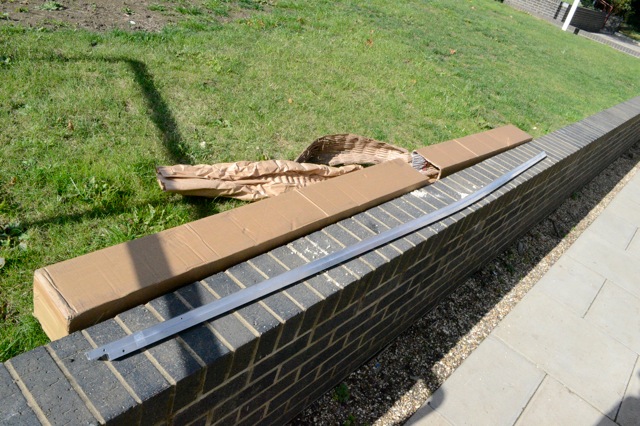
I'll spare the details of the actual horticulture, but we finished building a raised bed today and stained it and the existing deck. I installed a Met post at the back of the deck, which will be buried by the top soil I am bringing on site in the next couple of weeks. This has about 1m of wooden 6x6 inch fence post above ground which is supporting about 6m of aluminum pole. This will be the vertical section of the new inverted-L.
I had one more Met post lying around from the build and this has also been sunk in place next to the shed. It can hold both a trellis and my sectional mast for a VHF beam. I will draw a plan on the garden and post it over the next few days.
I also sorted out my pile of VHF yagis (plenty of work to do there!) and regsieterd the Clifton ARS for both NFD (cw) and VHF FD.
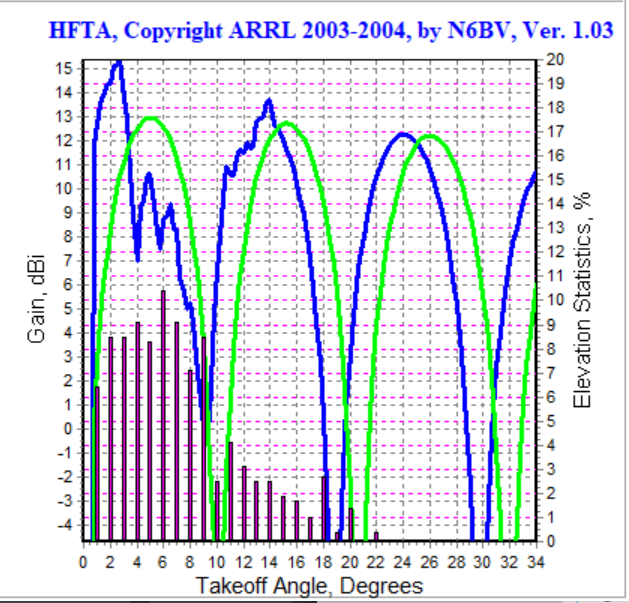
My recent poor performance in the HF contests has got me thinking about the HF antenna at home. I live in 1920's semi, converted into two flats. We have the upstairs and half of the garden which is 30ftx20ft. The current antenna is an inverted L, 20ft vertical, 35ft horizontal. Last weekend we built a deck in the garden and I buried 25m square of chicken much under it to act as a earth. I need to bring in some top soil as well before I lay a lawn so will probably put more chicken mesh under that too.
The apex of the house to the back of the garden is about 110 feet, so that is a bit short for an 80m dipole, but this month's antenna column in Radcom suggests that a 90ft doublet is 98% efficient on 80m. Good enough for me. But, does my chicken wire under the antenna make this NVIS? Not really what I want. On the other hand I just stick with my remote auto tuner at the bottom of the garden along with the standard inverted-L (25ft Vertical 90ft top). I have no idea if the earth mat is that good though. How do I find out?
Either way I need to get a halyard up to the chimney and I don't have a tall enough ladder. Any ideas how to do this without breaking the neighbors windows?
I participated in last night's RSGB Club championships SSB round. Unfortunately my antenna at home is rubbish on 80m, so I was always last in the queue of callers for each station. I gave up after 31Qs and an hour.... A few points for the Hadley wood contest group I suppose!